

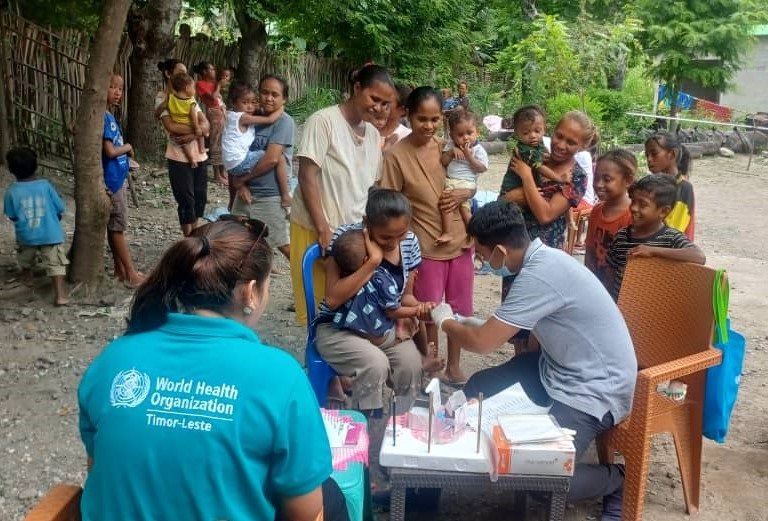

Timor-Leste has become the latest country to receive World Health Organization validation for eliminating trachoma as a public-health problem.
Trachoma is an infectious eye disease caused by Chlamydia trachomatis. Repeated infections can cause scarring inside the eyelid, eventually forcing the eyelashes to turn inward and damage the cornea. Without treatment, the process can result in permanent visual impairment and blindness.
The achievement followed years of surveillance and investigation. Between 2015 and 2017, health teams examined children on Atauro Island, assessed patients attending eye clinics and conducted targeted searches in communities. No trachoma was identified during those investigations.
Additional evidence was subsequently collected to determine whether transmission remained at a level requiring a specific public-health intervention. In 2025, nearly 5,000 samples from children aged one to five years across all 13 municipalities were analysed, with no evidence of transmission at the threshold requiring intervention.
WHO's validation is based not only on the absence of significant transmission but also on the country's capacity to detect and manage cases should they occur in the future.
Timor-Leste will continue providing eye-care services, including treatment for trichiasis and surgical procedures when required. Trachoma surveillance will also be incorporated into existing disease-monitoring systems.
The achievement has significance beyond Timor-Leste. It means that trachoma is no longer considered a public-health problem anywhere in the WHO South-East Asia Region.
The country now joins a growing group of nations that have demonstrated that sustained surveillance, community engagement, sanitation measures and access to treatment can contribute to eliminating preventable causes of blindness.