

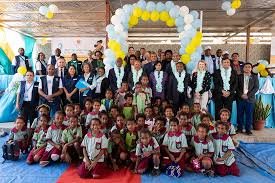

Papua New Guinea has introduced human papillomavirus vaccination into its national immunisation programme in an effort to reduce the future burden of cervical cancer.
Cervical cancer remains a major health concern in the country. More than 1,000 women are diagnosed each year, while approximately 650 die from the disease, according to figures cited by WHO and national health authorities.
The disease is largely preventable because persistent infection with high-risk types of human papillomavirus is responsible for more than 95% of cervical cancer cases. Vaccinating girls before they are exposed to HPV can therefore provide protection against infections that may later lead to cancer.
The programme initially targets girls aged nine to 14. Around 60,000 girls are expected to be reached during the first phase, which will cover the National Capital District and Central Province before expansion to other parts of the country.
Vaccination will be delivered through schools, health facilities and community outreach. The combination is intended to reach girls who are not attending school or who live far from healthcare services.
The programme uses a single-dose HPV vaccination schedule for girls in the target age group. WHO recommends HPV vaccination as an important component of cervical cancer prevention, alongside screening and treatment for women who already have cervical abnormalities.
Introducing the vaccine is particularly significant in countries where access to screening and treatment can be limited. Prevention through vaccination can reduce the number of women who eventually develop HPV-related cervical disease.
However, vaccination alone cannot eliminate cervical cancer. Women still need access to screening and appropriate treatment for precancerous lesions and invasive disease.
Papua New Guinea's programme will therefore require sustained investment in vaccine supply, cold-chain systems, trained health workers, community engagement and reliable data. Authorities will also need to ensure that girls living in remote communities are not excluded.
The initiative represents a long-term investment in women's health. By protecting girls before they are exposed to HPV, the country aims to reduce future cancer diagnoses and deaths while strengthening its broader programme of preventive healthcare.