

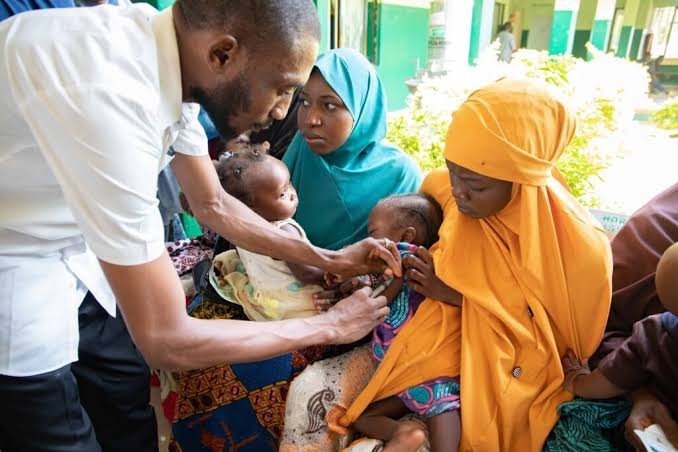

A clinical trial in Nigeria has found that providing a nutritional supplement alongside routine childhood vaccination services was associated with a substantial increase in measles vaccine uptake.
The study was conducted in Yobe State, northern Nigeria, an area where childhood undernutrition and incomplete vaccination coverage represent overlapping public-health challenges. Researchers tested whether small quantities of lipid-based nutritional supplements could be delivered through the same health facilities used for routine immunisation.
Twenty geographical clusters were randomly assigned to either the intervention or standard immunisation services. In the intervention areas, children aged between six and 23 months were offered monthly portions of the nutritional supplement after routine vaccination services.
At the end of the study, researchers assessed 1,604 children aged 12 to 23 months. The analysis found that children living in intervention areas had approximately twice the odds of having received the first dose of a measles-containing vaccine compared with those in the control group.
The difference represented an increase of about 20 percentage points in vaccination coverage relative to the control group. However, the researchers stressed that the intervention did not bring coverage close to the 95% level generally required to achieve population-level protection against measles.
The results are relevant because malnutrition and infectious diseases can reinforce each other. Children affected by undernutrition may face greater vulnerability to illness, while preventable infections can further threaten nutritional status and overall development.
The research suggests that combining services may offer a practical way to reach families who face barriers to accessing healthcare. It does not mean that nutritional supplements alone can solve vaccination gaps, and the authors note that additional community-based strategies are still required.
For Nigeria, the findings provide evidence that integrating different child-health interventions could help strengthen primary healthcare delivery, particularly in regions where families may have limited access to multiple services.