

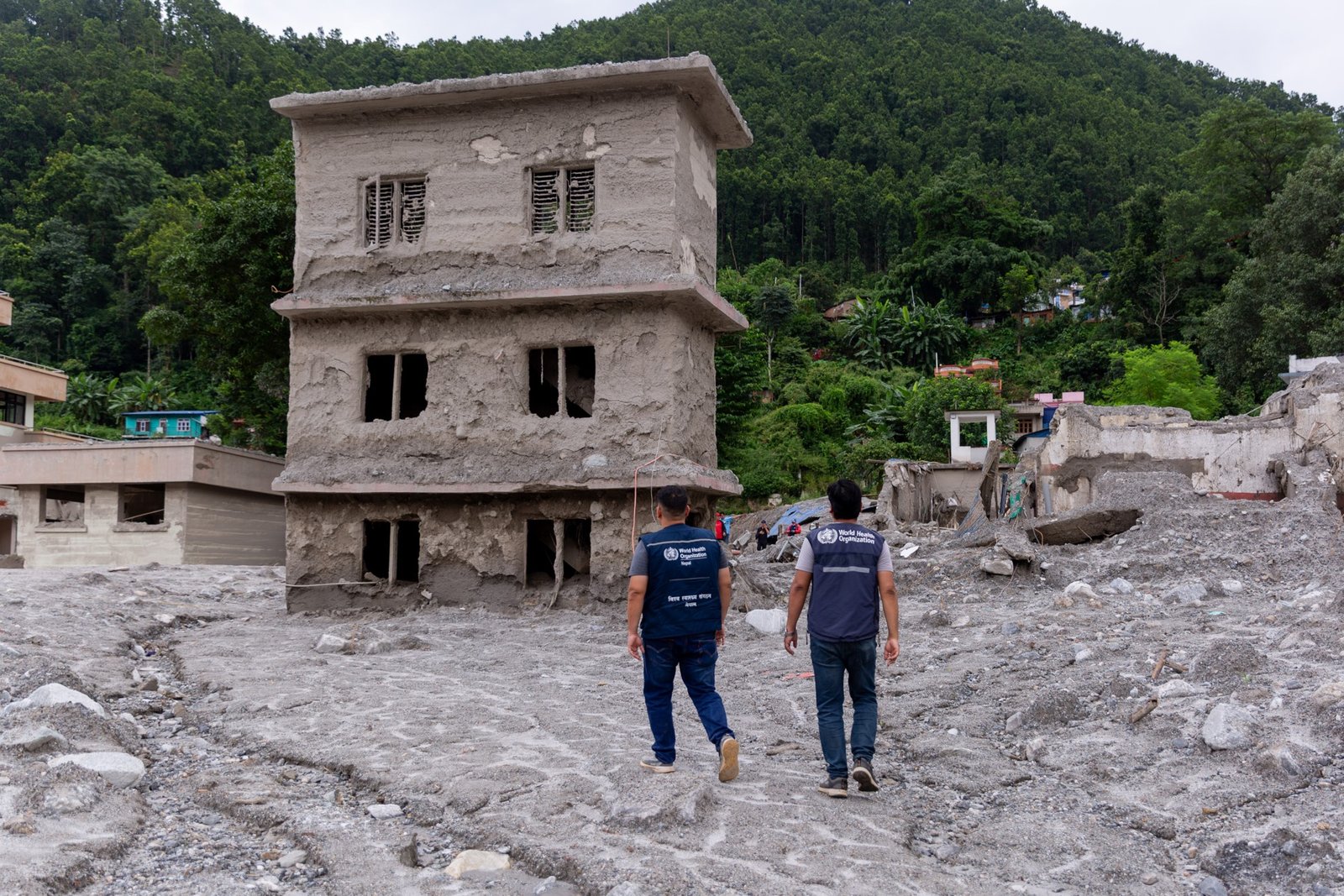

Nepal is strengthening its public-health response following severe flash floods that affected parts of the country in August 2026.
The flooding damaged homes, roads, water systems and health facilities in several districts, disrupting access to routine healthcare and leaving thousands of people displaced.
Public-health authorities have warned that the consequences of a major disaster can extend beyond the immediate injuries and deaths. Crowded temporary shelters, damaged sanitation infrastructure and interruptions to healthcare can increase the risk of infectious diseases.
Nepal's health authorities, supported by WHO, have therefore expanded disease surveillance in affected communities. The system allows unusual clusters of symptoms to be identified and investigated more rapidly.
The approach has already been used to investigate an increase in reports of fever accompanied by rash in one affected area. Health teams followed up the reports with local authorities and healthcare workers to determine whether the cases represented a wider outbreak.
Vaccination services have also been restored in affected communities. An oral cholera vaccination campaign began in Rasuwa and Nuwakot in September, with more than 50,000 people receiving the vaccine by 15 September.
Tetanus-containing vaccines are also being offered to healthcare workers, rescue personnel and others working in environments where injuries may expose them to infection.
At the same time, preparations have been made for measles-rubella vaccination among children aged six months to 15 years in affected areas, particularly those living in temporary settlements.
The response illustrates why maintaining routine healthcare during emergencies is an important part of disaster preparedness. Restoring vaccination, monitoring infectious diseases and continuing treatment for chronic conditions can help prevent a natural disaster from developing into a wider health crisis.