

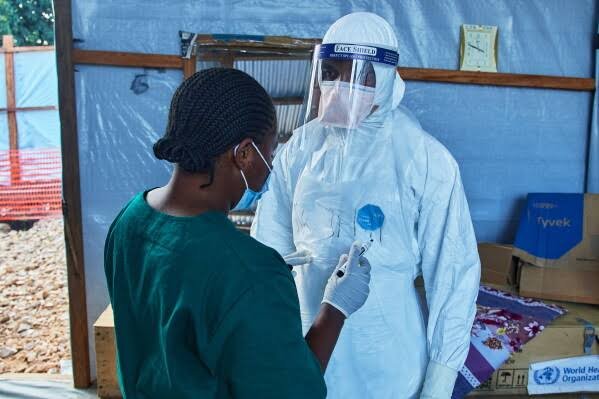

The Democratic Republic of the Congo (DRC) is conducting clinical research into an experimental approach designed to prevent Ebola disease among people who have been exposed to the virus. The study is taking place during an outbreak caused by Bundibugyo virus, a form of Ebola for which there is currently no specifically licensed vaccine or treatment.
The investigation is evaluating obeldesivir, an oral antiviral developed by Gilead Sciences, as post-exposure prophylaxis. The strategy involves giving the medicine to people considered at high risk after contact with an infected individual, before symptoms appear. Participants are monitored closely for signs of disease and receive medical care if infection develops.
The trial is being led with international scientific and humanitarian partners and aims to enrol close to 1,000 people. More than 250 participants had already joined by the latest report, including healthcare workers and relatives or other contacts of people affected by the outbreak.
The research is particularly important because Bundibugyo virus differs from the Ebola species responsible for some of the outbreaks for which countermeasures are better established. WHO experts have identified several candidate treatments for clinical evaluation, including monoclonal antibodies and remdesivir, while obeldesivir has been prioritised for investigation as a preventive option following exposure.
The outbreak has created substantial pressure on health services in affected parts of the DRC. Surveillance, contact tracing, vaccination strategies and clinical research are being carried out alongside efforts to provide routine care and protect healthcare workers.
The research does not yet establish whether obeldesivir can prevent Bundibugyo virus infection in humans. Its effectiveness and safety in this specific setting must be determined through the clinical trial. Nevertheless, the study represents an important attempt to develop evidence-based tools against a form of Ebola for which treatment options remain limited.