

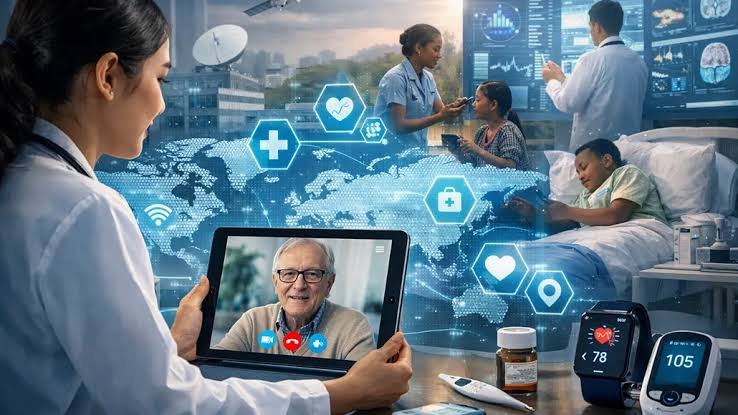

Digital health has become an increasingly important part of modern healthcare. Telemedicine, electronic health records, remote monitoring and mobile health applications are changing how patients interact with medical services.
The expansion of digital healthcare accelerated during the COVID-19 pandemic, when many health systems introduced or expanded remote consultations. Since then, countries have continued to explore ways of integrating digital tools into routine healthcare.
Telemedicine can be particularly valuable for patients who live far from hospitals or specialists. Remote consultations may reduce travel requirements and improve access to certain services, although they cannot replace every form of face-to-face medical care.
Data security remains a central concern. Healthcare information is highly sensitive, and digital systems must be designed to protect patients from unauthorised access and cyber threats.
The World Health Organization has identified digital health as an important component of efforts to strengthen healthcare systems and improve access. However, digital inequality means that not everyone has the same access to reliable internet connections, devices or digital literacy.
Countries including the United Kingdom are continuing to develop digital healthcare strategies. The long-term challenge will be ensuring that technology improves access without creating new barriers for patients who are less connected or less familiar with digital services.